
Assessing the Impact of Environmental Pollution in Areas Affected by Hostilities on Living Conditions
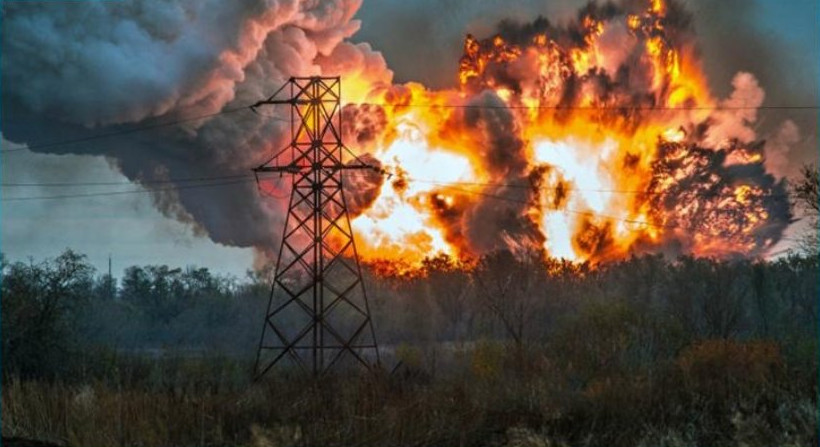
Specialists from the Institute’s Laboratory of Hygiene Carcinogenic Factors and Nanomaterials are carrying out a research project titled «Determining the Impact of Environmental Pollution in Areas Affected by Hostilities on Living Conditions of the Population,» with a project duration of 2024–2026. As part of this research project, a significant amount of research has been carried out over the past two years regarding the impact of military operations on the contamination of environmental objects with carcinogenic substances.
It has been established that explosive processes and fires resulting from combat operations are a significant source of toxic substances entering the environment, accompanied by the formation of carcinogenic polycyclic aromatic hydrocarbons (PAHs), with the resulting pollution spreading over long distances from the epicenter of the fire or explosion, leading to a sharp increase in soil contamination. At sites of rocket and artillery shell explosions, concentrations of benzo(a)pyrene – the primary representative of carcinogenic PAHs – exceed the maximum permissible concentration in soil by 5 to 22 times, depending on the type of munition.
Field studies have shown that during a rocket explosion, the contaminated portion of the soil is displaced several dozen meters from the explosion site, leading to the contamination of a significant area with carcinogenic substances (over 8,000 m²). At the same time, the contamination zone formed after a Guided Aerial Bomb explosion is several times larger than the one mentioned above. Depending on the amount of explosives, not only the area of contamination but also the concentrations of toxic substances vary. It has been found that soil is more heavily contaminated with carcinogenic substances after a Guided Aerial Bomb strike than after a missile strike: following a Guided Aerial Bomb strike, the concentration of benzo(a)pyrene in the soil exceeds the MPC by nearly 23 times, whereas in the case of a missile strike, it exceeds it by up to 3.5 times.
The research data indicate that the concentrations of PAHs in soil samples depend on the explosive power of the munitions. The highest levels of contamination were observed in areas where high-explosive aerial bombs (HEBs) detonated and at sites of burned-out equipment, where the total content of carcinogenic PAHs (benzo(a)pyrene, benzo(k)fluoranthene, indeno (1,2,3-cd)pyrene, dibenz(a,h)anthracene) exceeded background levels by 10-40 times.
It was found that as a result of the combustion of military equipment, significant local soil contamination with PAHs is observed. It was established that benz(a)pyrene concentrations in the soil immediately adjacent to the burned-out equipment exceed background levels by 18-22 times.
It has been shown that surfactants can enter aquatic ecosystems: concentrations of surfactants (benzo(b)fluoranthene, benzo(k)fluoranthene, chrysene, fluoranthene, pyrene, anthracene) in sediment deposits of surface water bodies in combat zones exceed control values, and water decanted from the sediment also contains significant concentrations of PAHs, indicating the negative impact of hostilities on the environment.
In 2026, research under this project continues. Preliminary research results have been submitted to the Specialized Environmental Prosecutor’s Office of the Office of the Prosecutor General of Ukraine.
Head of the Laboratory of Hygiene Carcinogenic Factors and Nanomaterials
Doctor of Medical Sciences Vitalii BABII
(date of publication on the website: 11.03.2026)